History of Idaho’s State Parks

An Interactive Timeline

Idaho History Plentiful
in State Parks

Idaho State Parks curate the story of how Idaho came to be, showing how those who chose to live here made it the place so many cherish today. Take a virtual tour of the state’s history by exploring the timeline below.

How the Department Began

One governor’s vision — and one extraordinary gift.

The Idaho Department of Parks and Recreation owes its existence largely to the vision of one man, Governor Robert E. Smylie. He looked into the future and saw a professionally managed system of state parks available for the enjoyment of all Idaho’s citizens and visitors. He kept that vision in mind when Roland and Averell Harriman offered to donate their beloved Railroad Ranch to the state if a professional managing agency was put in place before the transfer of their generous gift would take place.

Others took up this vision and, when the opportunity presented itself, added recreation to the agency’s charge to take advantage of the new federal Land and Water Conservation Fund in 1966. The agency became the Idaho Department of Parks and Recreation, and through that federal program helped countless cities and counties across the state fulfill their own outdoor recreation visions in their individual communities.
Steve Bly with Gladys and Roland Harriman

The Idaho Park & Recreation Board


Steve Bly with Gladys and Roland Harriman Since 1965, the Department has been governed by a six-person board with each member representing a different geographic area of the state. The board has the power “to appoint a director to serve at its discretion” (Title 67, Chapter 42, Idaho Code).

Take a virtual tour of the state’s history by clicking these park links — each one a chapter in how Idaho came to be.

Tap any era · scroll the timeline

First Peoples & Land

Hells Gate

The park lies on river bottom left over from the great ice age floods about 15,000 years ago.

Hells Gate: The park lies on river bottom left over from the great ice age floods about 15,000 years ago. The park was once the site of a Nez Perce village and has an extensive display about the Lewis & Clark expedition.
Read more
15,000 BCEIce Age

Pre-ContactAncestral

First Peoples & Land

Castle Rocks

Remnants of Native American pictographs, historic trail crossings, and 20th century ranching are visible today.

Castle Rocks: Remnants of Native American pictographs, historic trail crossings, and 20th century ranching are visible today.
Read more

First Peoples & Land

Heyburn

The Coeur d’ Alene Tribe were the first inhabitants of the area that is now the park.

Heyburn: The Coeur d’ Alene Tribe were the first inhabitants of the area that is now the park. An ideal place for an encampment, the lakes provided an abundance of fish and waterfowl. Much of the early construction was performed by Civilian Conservation Corps (CCC), a Great Depression-era initiative to put people to work doing public service projects.
Read more
Ancestral+ CCC

1843–1882Oregon Trail

Trails & Wagons

City of Rocks National Reserve

Pioneer inscriptions, wagon ruts, and journal accounts from a quarter-million travelers.

City of Rocks National Reserve: The hundreds of pioneer inscriptions, wagon ruts, and journal accounts testifying to the nearly quarter-million people who traveled through here between 1843 and 1882.
Read more

Trails & Wagons

Coeur d’Alene’s Old Mission

The oldest building in Idaho — constructed by Catholic missionaries and the Coeur d’Alene Tribe.

Coeur d’Alene’s Old Mission: The Mission of the Sacred Heart was constructed between 1850 and 1853 by Catholic missionaries and members of the Coeur d’Alene Tribe. It is the oldest building in Idaho.
Mission with lift
Read more
1850–1853Mission

1843–1882Snake Crossing

Trails & Wagons

Three Island Crossing

The famous Snake River crossing on the Oregon Trail — also the most difficult in Idaho.
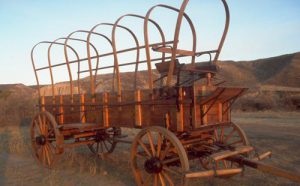
Three Island Crossing: The famous Snake River crossing on the Oregon Trail was also the most difficult in Idaho. Still, pioneers tried their luck to access the northern route which offered better water and animal feed.
Three Island empty wagon
Read more

Trails & Wagons

Massacre Rocks

Named for an emigrant wagon party skirmish — debate continues as to the details.

Massacre Rocks: The park derived its name from an emigrant wagon party skirmish — debate continues as to the participants and details of the conflict. Register Rock holds the signatures of Oregon Trail emigrants who rested during their journey, and remnants of the Oregon Trail are viewable throughout the park.
Read more
~1862Register Rock

Oregon Trail+ Dairy Era

Trails & Wagons

Thousand Springs

Ritter Island preserves the history of dairy pioneer Minnie Miller. Oregon Trail sections remain to be explored.

Thousand Springs: At the park’s Ritter Island unit, the history of dairy pioneer Minnie Miller is preserved and the story of this accomplished woman told. Elsewhere, Oregon Trail sections remain to be explored.
Read more

Industry & Settlement

Land of the Yankee Fork / Challis Hot Springs

A frontier mining park — museum, ghost towns, and a historic hot spring built for weary miners.

Land of the Yankee Fork/Challis Hot Springs: The park brings to life Idaho’s frontier mining history, containing a museum, ghost towns, Native American history, and a historic hot spring built to cater to weary miners.
Bayhorse Stamp Mill
Read more
Mining EraFrontier

1912Oregon Short Line

Industry & Settlement

Ashton-to-Tetonia Trail

Built in 1912, the Oregon Short Line Railroad once connected the communities along this route.

Ashton-to-Tetonia Trail: Built in 1912, the Oregon Short Line Railroad, a subsidiary of the Union Pacific Railroad, connected the communities of Ashton, Idaho, through Drummond, Lamont, Tetonia, Driggs, and Victor. The abandoned rail line is now the A-T Trail, and the community connections endure.
AshtonTetonia trestlefall
Read more

Industry & Settlement

Priest Lake

Film pioneer Nell Shipman set up a movie studio here — at what is today the Lionhead boat launch.

Priest Lake: In 1921, film pioneer Nell Shipman visited the lake for a shoot — and later set up a movie studio on what is today the Lionhead boat launch.
Read more
1921Nell Shipman

Railroad EraOld West

Industry & Settlement

Harriman

The old “Railroad Ranch” — once a refuge for railway magnates, today a celebrated wildlife refuge.

Harriman: The old “Railroad Ranch” once provided refuge to yesterday’s railway and industrial magnates but today is a wildlife refuge that also celebrates the Old West culture.
Read more

Modern Idaho

Farragut

A massive WWII training center — briefly Idaho’s largest city by population.
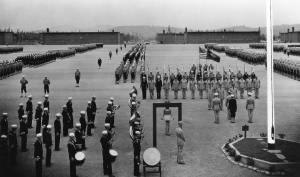
Farragut: The massive World War II training center was briefly Idaho’s largest city by population and continues to tell the story of the country’s war-time mobilization.
farragut parade ground
Read more
WWIITraining

20th c.Prison Farm

Modern Idaho

Eagle Island

An oasis in urbanizing Ada County — once Idaho’s prison farm.

Eagle Island: This oasis in urbanizing Ada County used to be Idaho’s prison farm, where for decades trustees engaged in agriculture while working off their debts to society.
Read more

Department Founded

A Governing Board Convenes

A six-person board with each member representing a different geographic area of the state begins governing the Department.

Since 1965, the Department has been governed by a six-person board with each member representing a different geographic area of the state. The board has the power “to appoint a director to serve at its discretion” (Title 67, Chapter 42, Idaho Code).
Read more
1965Board Formed

1966Recreation Added

Department Renamed

Recreation Joins the Charge

The agency takes advantage of the new federal Land and Water Conservation Fund — and becomes the Idaho Department of Parks and Recreation.

Others took up this vision and, when the opportunity presented itself, added recreation to the agency’s charge to take advantage of the new federal Land and Water Conservation Fund in 1966. The agency became the Idaho Department of Parks and Recreation, and through that federal program helped countless cities and counties across the state fulfill their own outdoor recreation visions in their individual communities.
Read more

America 250

A small chapter in the saga of America at its 250th anniversary.

The story of Idaho’s State Parks is a small chapter in the saga of America at its 250th anniversary. Please see the A250 website for all activities associated with this momentous event.