 Official Government Website
What can we help you find?
What can we help you find?


The Ashton-Tetonia Trail opened to the public in 2010 and is administered by the Idaho Department of Parks and Recreation and managed through Harriman State Park. This 29.6 mile trail follows the abandoned railroad grade of the Teton Valley Branch of the Union Pacific Railroad from Ashton to Tetonia.
Built in 1912, the Oregon Short Line Railroad, a subsidiary of the Union Pacific Railroad, connected the communities of Ashton, Idaho, through Drummond, Lamont, Tetonia, Driggs, and Victor. The railroad brought prosperity to the sparsely populated Teton Valley; it connected formerly isolated communities and commerce, and moved important agricultural freight, such as livestock, seed potatoes, peas, and grain.
Though heavy snowfall often closed the line for days at a time, the railroad was essential transportation in Teton Valley. For many years, passenger trains ran to and from Victor each day, with connections in Ashton and Idaho Falls for West Yellowstone, Pocatello, and Salt Lake City. The Oregon Short Line was also the best route to Yellowstone and Grand Teton National Parks, carrying visitors to the dude ranches of Jackson Hole. Improvements to State Highways 32 and 33 caused a significant decline in rail use in the 1960’s. Fewer people traveled by passenger train, and much of the freight began to be transported by trucks. The line was abandoned from Tetonia to Victor in 1981, and from Ashton to Tetonia in 1984.
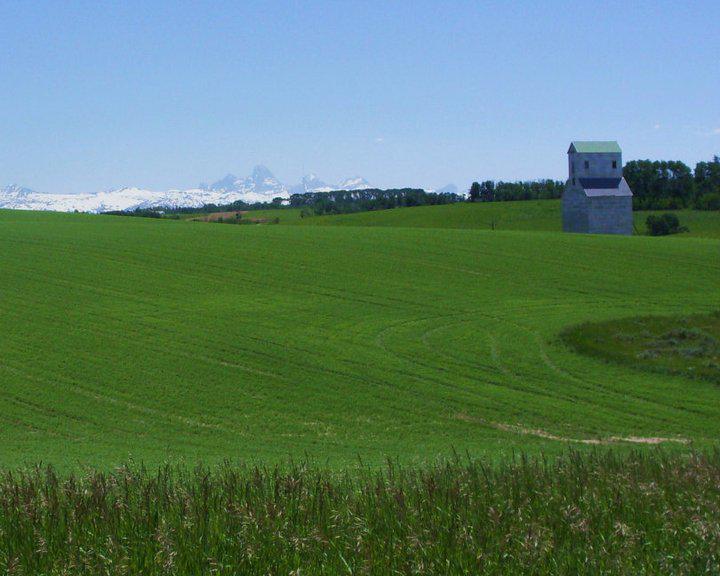
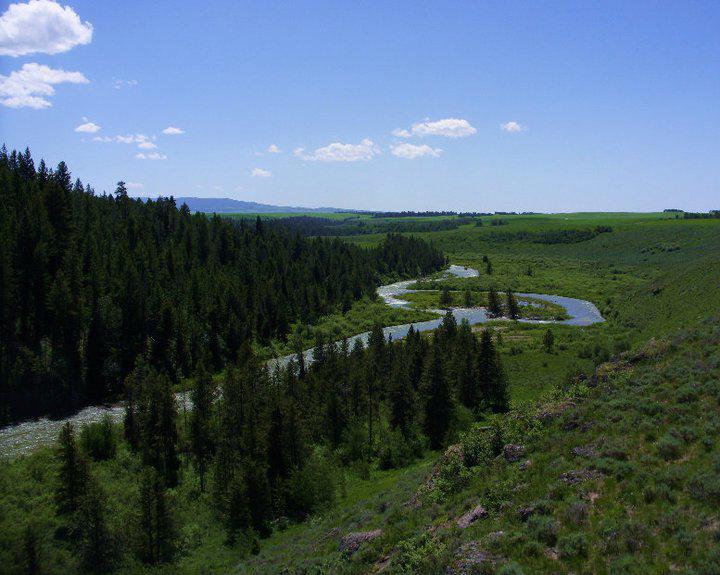
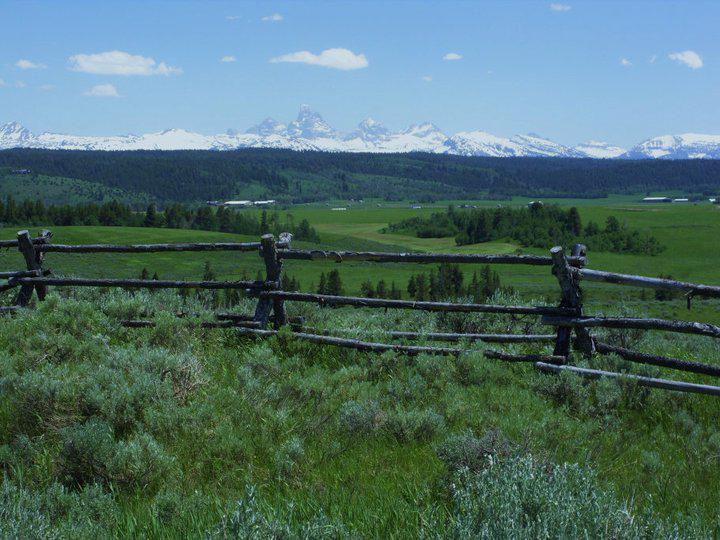
The trail winds through small riparian areas and stands of aspen trees, and over three historic trestle bridges. Just west of the Teton Range, the Ashton-Tetonia Trail once again connects people and places, the past and future. Completed in 2010 under the Rails to Trails Conservancy program, the abandoned rail was transformed into a vibrant public space managed by the Idaho Department of Parks and Recreation. The 29.6-mile trail features riding through a pristine and secluded environment that hearkens back to simpler times. Today, visitors will enjoy the beautiful farm country of eastern Idaho, 3 bridge crossings, and unsurpassed views of the Teton Mountains. The historic train trestles at Fall River, Conant Creek, and Bitch Creek span 600’ in length and 130’ in height, and are popular landmarks along the trail. Visitors can experience the trail by hiking, biking, horseback riding, as well as Nordic skiing, snowshoeing, and snowmobiling in winter. The trail is packed gravel/dirt, so mountain bikes (or bikes with tires at least 32mm wide) are recommended. Road bikes are not appropriate.
- Hike
- Bike
- Horse
- Indoor Restrooms
- Swimming - Lake/River
- Vault Toilets


General Accommodations
No accomodations listed.
There is no additional information about group accommodations available.
No additional information listed.
Trail Maps
Parking Access
Section Maps
Scroll to bottom of page for more information on the Ashton-Tetonia Trail Paving Project and the Visitor Center Improvement Projects.

 49°F
Special Projects
The Idaho Department of Parks and Recreation plans to pave the Ashton-Tetonia Trail, Some work will begin this fall, with the majority scheduled for next year. Seeking to attract more users and to decrease the annual maintenance of the trail, the department secured federal funding to pay for the $3 million project.
Based on the experience with the Coeur d’Alene Parkway and the Trail of the Coeur d’Alenes in North Idaho, the department expects the paving will be beneficial to the area’s economy.
Project Details
- Construction:
-3.56 miles from Ashton to Falls River Trestle
-0.92 miles from Judkins Parking Lot toward Bitch Creek Trestle
-0.94 miles from Tetonia Parking Lot to Highway 33
-Paving 5 parking areas for improved access
-Installing 14 upgraded gates
-Adding new trail signage for easier navigation
- Length: Paving 5.5 miles of trail
- Width: 8-10 feet
- Thickness: 3 inches of asphalt over a 9 inch base layer of compacted material.
Funding comes from an EDA federal grant, which is designed for economic development. An economic impact study showed that the Coeur d’Alene Parkway and Trail of the Coeur d’Alenes contribute $1.4 million and $1 million, respectively, each year to the local economy.
The benefits of a paved trail include a smooth surface for cyclists, parents with baby strollers, and for those with wheelchairs or other adaptive equipment. Asphalt will last many years with relatively low maintenance, alleviating the need to weeding, grading and other maintenance, which experience has shown to be a challenge.
Ashton-Tetonia Trail Comments
The project started in April 2024 and is expected to be completed by September 2024. The goal of this project is to make the building more accessible, complete much needed repairs/ replacements to fundamental parts of the building, and to improve the facility so it can be open year-round.
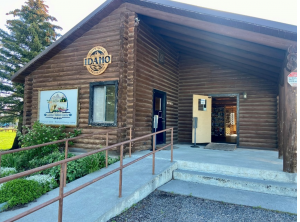
This project includes the following upgrades:
- Furnace
- Pellet stove
- Office space
- ADA Accessibility for bathrooms and the entrance
- Restroom remodel
- Roof replacement
- Exterior staining/ trim replacement